
-
Autonomous Artificial Intelligence in Armed Conflict: Toward a Model of Strategic Integration, Ethical Authority, and Operational Constraint
Elise Annett and James Giordano
This commentary explores how autonomous artificial intelligence (AI) is changing the nature of armed conflict and what it means for military strategy. AI-enabled systems, from autonomous sensors to decision aids, can improve situational awareness, speed decision cycles, and support complex operations. But the increasing autonomy of these systems also raises ethical, legal, and strategic questions, especially about accountability, control, and escalation risk. The article proposes a model for integrating autonomous AI into strategy that balances capability gains with ethical oversight and operational restraint. It concludes that responsible adoption of autonomous AI will require clear policy frameworks, robust governance, and multinational cooperation to ensure stability and uphold international norms.
-

The Agentic Database and Military Command: A Perspective on Autonomous C2 Systems
Elise Annett and James Giordano
This commentary explores how emerging autonomous command and control (C2) systems, powered by advanced machine learning and data-driven decision engines, are transforming military decision processes. The authors introduce the concept of an “agentic database,” a framework in which autonomous systems actively sense, assess, and act upon dynamic operational data to support or augment human command decisions. While these systems offer potential benefits in speed, situational awareness, and decision quality, they also raise critical questions about accountability, trust, human oversight, and strategic risk. Meaningful integration of autonomous C2 requires doctrinal clarity, clear ethical guidelines, robust verification, and continuous human-machine collaboration to ensure effective, responsible, and controlled use of these technologies in future joint and coalition operations.
-

The “Ins” and “Outs” of Cognitive Warfare: What’s the Next Move?
Elise Annett and James Giordano
This commentary examines the evolving landscape of cognitive warfare and argues that strategic competition is increasingly centered on influence in the cognitive domain. China is integrating advances in science and technology, including artificial intelligence, neurotechnology, and information operations into a comprehensive strategy aimed at achieving cognitive dominance over the United States and its allies. The authors describe cognitive engagement as operating “inside-out,” “outside-in,” and through combined effects that shape perceptions, decision-making, and behavior across biological, psychological, and socio-economic dimensions. The article recommends investment in AI-enabled command and control, neuroadaptive human-machine systems, cognitive readiness training, and coordinated multinational narrative dominance.
-

Major Concerns About Microelectronics
Elise Annett, Steven Hanson, and James Giordano
This commentary examines the critical role of secure microelectronics in enabling artificial intelligence (AI)–driven military capabilities and sustaining U.S. strategic advantage. As AI accelerates decision cycles, enhances intelligence, surveillance, and reconnaissance (ISR), and integrates with neurocognitive systems, its effectiveness depends on trusted semiconductor infrastructure. The authors warn that foreign-manufactured or compromised microelectronic components pose systemic risks to command and control, critical infrastructure, and operational continuity. Supply chain vulnerabilities, including embedded “rogue” devices, could enable sabotage or disruption in contested environments. The article recommends on-shoring microelectronics production, restricting off-shoring of mission-critical components, and strengthening defense-industrial oversight to ensure hardware integrity. Secure microelectronics are foundational to trustworthy AI, human–machine integration, and future battlefield resilience.
-

The Orb’s Eye: Seeing the National Security Implications of Iris Based ‘Proof of Humanity’
Elise Annett, James M. Keagle, and James Giordano
This commentary examines the national security implications of iris-based biometric identity systems such as “The Orb,” a device designed to verify human users in an AI-saturated digital environment. While proof-of-personhood technologies may help counter synthetic media, bot networks, and AI-driven disinformation, the authors argue that centralized biometric identity infrastructures create significant strategic vulnerabilities. Risks include surveillance, coercion, identity forgery, cyber-espionage, financial manipulation, and potential use in cognitive warfare or critical infrastructure disruption. The article outlines governance and security recommendations to mitigate dual-use threats. Orb-like systems could either strengthen democratic resilience or become instruments of strategic influence, depending on how they are regulated and secured.
-

Artificial Intelligence: A Double-Edged Sword in Support and Subversion of the Biological Weapons Convention; Part Two: Implications and Recommendations
Diane DiEuliis, Elise Annett, and James Giordano
This commentary is Pt. 2 of the "Artificial Intelligence: A Double-Edged Sword in Support and Subversion of the Biological Weapons Convention" series. This piece analyzes how artificial intelligence (AI) interacts with the Biological Weapons Convention (BWC) in both supportive and potentially adversarial ways. The authors explain that AI can strengthen biodefense by improving detection, biosurveillance, and compliance monitoring of biological threats. For example, AI can integrate large datasets to identify anomalies in genomic sequences or global research activity that indicate misuse. However, the same capabilities can be exploited to develop, conceal, and disseminate biological agents, automate laboratory processes that lower barriers to misuse, or obscure illicit activities within scientific ecosystems. This dual-use nature means AI acts as a “double-edged sword,” offering new defensive tools while also creating novel risks. The article calls for policies and governance that balance innovation with safeguards to uphold the BWC’s objectives.
-

Brain Scanning: Assessing Emigration of U.S. Scientific Talent to Surveille Strategic Implications for China’s Dual-Use Technological Capabilities
Diane DiEuliis and James Giordano
This commentary analyzes the emigration and remote collaboration of U.S.-trained scientists with China and assesses the strategic implications for Beijing’s dual-use research and development ecosystem. The authors argue that the transfer of scientific talent in fields such as artificial intelligence, quantum computing, synthetic biology, and neurotechnology strengthens China’s Military-Civil Fusion strategy and accelerates both non-kinetic and kinetic capabilities. At the same time, patterns of talent migration and collaboration can serve as indicators of China’s technological priorities, doctrinal shifts, and defense development timelines. The article proposes a balanced U.S. response that combines improved domestic talent retention, refined vetting of international partnerships, and AI-enabled monitoring of research networks to better anticipate and shape strategic competition in emerging science and technology domains.
-

Beyond Mechanistic Control: Causal Decision Processing in Neuromorphic Military Artificial Intelligence
James Giordano
This article explains how neuromorphic artificial intelligence (AI), AI designed to mimic brain-like reasoning, differs from traditional rule-based systems and what that means for military decision-making. Unlike mechanistic AI that reacts predictably to inputs, neuromorphic AI integrates data and context more like the human brain, allowing adaptive responses in complex environments. While this could improve how autonomous systems operate in uncertain conflict zones, it also raises new questions about control, predictability, accountability, and ethical use. The author argues that integrating such systems into defense operations must be guided by clear oversight, doctrine, and ethical frameworks to ensure effectiveness, safety, and stability in future military engagements.
-

Beyond Mechanistic Control: Causal Decision Processing in Neuromorphic Military Artificial Intelligence
James Giordano
This commentary explores how neuromorphic artificial intelligence, AI designed to mimic the causal and adaptive processing of the human brain, differs from traditional mechanistic systems and what this means for military applications. Traditional AI follows straightforward stimulus-response patterns that work well in predictable scenarios, but they struggle in complex, dynamic environments. Neuromorphic AI uses more human-like causal processing, integrating multiple streams of data and contextual cues to make decisions that better adapt to ambiguity and uncertainty. While this offers potential advantages in autonomy and operational flexibility, it also raises challenges for predictability, command and control, verification, and accountability. The article argues that successful military integration will require careful oversight, phased implementation, and new training models to ensure ethical, effective, and controllable use of these emerging AI capabilities.
-

Biotechnologies and the Treaty Gap: Why Biological Weapons Governance Is Falling Behind; and Some Thoughts on How to Fix It
James Giordano
This commentary examines how rapid advances in biotechnology are outpacing the ability of existing international agreements, especially the Biological Weapons Convention (BWC), to effectively govern emerging risks. Dr. Giordano explains that technologies such as synthetic biology, gene editing, and AI-assisted biological design are creating capabilities that blur the line between legitimate research and potential misuse, leaving enforcement and oversight systems outdated. These developments expose a “treaty gap” in which governance does not match technological reality, undermining global norms against biological weaponization. Strengthening international governance frameworks, improving transparency and verification mechanisms, and incorporating emerging science into treaty language will be essential for preventing misuse while supporting beneficial innovation.
-

Biotechnology in the FY 2026 NDAA: Strategic Implications — and Recommendations — for Joint Force Readiness
James Giordano
This commentary analyzes how biotechnology provisions in the FY 2026 National Defense Authorization Act (NDAA) reflect emerging opportunities and challenges for U.S. national security. It explains that key investments in bioindustrial capacity, synthetic biology, bioinformatics, and related research signal a strategic shift toward integrating biological technologies into defense planning. While these advancements can strengthen biodefense, medical readiness, and operational resilience, they also raise policy, ethical, and governance questions about prioritization, oversight, and risk management. Dr. Giordano offers practical recommendations, including the need for enhanced workforce education, robust interdisciplinary coordination, and international collaboration to ensure responsible innovation. Aligning biotechnology investment with strategic deterrence will be critical for maintaining competitive advantage amid rapid global technological change.
-

Bold New Bioweapons: Part 1 — The Burdens of Detection and Attribution
James Giordano
This commentary, Pt. 1 of the Bold New Bioweapons series, examines how advances in gene editing, synthetic biology, and artificial intelligence are reshaping the biological weapons threat landscape and challenging the effectiveness of the Biological Weapons Convention (BWC). Dr. Giordano argues that decentralized research ecosystems, AI-enabled pathogen design, and dual-use biotechnology complicate detection, attribution, and deterrence. Emerging techniques can produce synthetic or modified biological agents that evade traditional surveillance systems and blur distinctions between legitimate research and weaponization. The absence of clear adjudication mechanisms within the BWC creates governance gaps exploitable by state and non-state actors. The article emphasizes that modern biodefense requires enhanced biosurveillance, precision bioinformatics, and AI-driven threat detection to shift from reactive response to proactive deterrence.
-

Bold New Bioweapons: Part 2 — Bold Bolstering of Deterrence and Defense
James Giordano
This commentary, Pt. 2 of the Bold New Bioweapons series, argues that modern biological threats demand a proactive transformation of deterrence and defense strategies. Building on earlier analysis of detection and attribution challenges, Dr. Giordano asserts that emerging life sciences and related technologies, such as synthetic biology, gene editing, and AI-driven bioengineering blur distinctions between legitimate research and weaponizable capabilities. This undermines traditional deterrence frameworks. To address these complexities, the article proposes adaptive, interoperable, and ethical approaches that integrate advanced biosurveillance, precision bioinformatics, AI-enabled threat modeling, and global collaborative governance. It emphasizes the need for robust international norms and resilient defense postures that align technological innovation with strategic deterrence, enabling the United States and its allies to shape the future biosecurity environment and reinforce stability.
-

Convergent Critical Technologies Part 1: The Integrative Transformation of Warfighting
James Giordano
This commentary examines how the Department of War’s six designated Critical Technology Areas: Applied Artificial Intelligence, Biomanufacturing, Contested Logistics Technologies, Quantum and Battlefield Information Dominance, Scaled Directed Energy, and Scaled Hypersonics are collectively transforming military operations. Rather than focusing only on the individual capabilities of these technologies, the author argues that their most strategic value lies in convergent integration across domains and conflict phases. When combined, these technologies can accelerate decision-making, sustain forces in contested environments, enhance sensing and strike capabilities, and optimize operational logistics. The article highlights how integrated technology effects can reshape both kinetic and non-kinetic warfare, challenge traditional definitions of combat, and demand new doctrinal, ethical, and legal frameworks.
-

Critical Technology Areas Part 2: Implications and Recommendations for the Warfighter and Warfighting
James Giordano
This commentary builds on the designation of six Critical Technology Areas defined by the U.S. Department of War: Applied Artificial Intelligence, biomanufacturing, contested logistics technologies, quantum and battlefield information dominance, scaled directed energy, and scaled hypersonics, to analyze their implications for future warfighting and to offer practical recommendations. Dr. Giordano explains how these technologies will compress decision timelines, blur attribution, and integrate across domains, fundamentally altering operational tempo and strategic risk. Preparing warfighters for these changes requires heightened technical literacy, updated education and training, organizational adaptation, and robust ethical frameworks. The article argues that doctrinal evolution, iterative experimentation, and interdisciplinary integration will be essential to maintaining operational dominance in future conflict environments shaped by technological convergence.
-

Strategic Innovation in the DoD FY 2026 RDTE Budget: Leveraging Disruptive Technologies for Deterrence, Defense, and Command and Control
James Giordano
This commentary analyzes the Department of Defense FY 2026 Research, Development, Test, and Evaluation (RDTE) budget and its strategic emphasis on convergent disruptive technologies. The author argues that expanded investment in artificial intelligence, quantum systems, hypersonics, and space capabilities reflects a doctrinal shift toward integrated, multi-domain deterrence and AI-enabled command and control. These technologies are described not merely as tools, but as operational paradigms reshaping force posture, battlefield tempo, and cross-domain warfare. The article also addresses ethical oversight, human–machine teaming, quantum resilience, hypersonic navigation, and the biological and cognitive implications of technological convergence. It concludes that sustained advantage will require institutional agility, doctrinal revision, and professional military education reforms to align technological investment with strategic responsibility.
-

Moving at WARP Speed Toward Developing the Cyborg Soldier
James Giordano and Diane DiEuliis
This commentary examines how rapidly advancing technologies are reshaping the future of the military warfighter. The convergence of artificial intelligence, neurotechnology, biotechnology, and human-machine interfaces is moving defense innovation toward enhanced or “cyborg” soldiers capable of improved performance, endurance, and decision-making. While these developments promise operational advantages, they also raise serious ethical, legal, and strategic concerns. Questions about autonomy, vulnerability to cyber manipulation, long-term health effects, and international norms must be addressed before such capabilities become widely deployed. The article argues that technological momentum should not outpace governance and doctrine. To ensure responsible innovation, policymakers must develop clear oversight mechanisms and deterrence frameworks that balance military advantage with ethical responsibility and long-term strategic stability.
-

Tiny Particles, Big Stakes: The Strategic Implications of Micro‑ and Nanoplastics
James Giordano and Ashok Vaseashta
This commentary explores how micro- and nanoplastics, tiny plastic fragments present throughout the environment, pose emerging strategic challenges beyond environmental and health concerns. While micro- and nanoplastics are now found in water, soil, plants, animals, and even human bodies, their long-term effects on ecosystems, food and water safety, and human health remain poorly understood. These particles can infiltrate critical systems, potentially affecting troop readiness, infrastructure resilience, and national food security. Nanoplastics may also serve as vectors for biological or chemical contaminants, complicating detection and mitigation. The article argues that micro- and nanoplastics should be treated as a strategic security issue, calling for enhanced monitoring, international cooperation, and adaptive policy responses to protect public safety and national defense interests.
-
China’s Military Diplomacy in Africa
Matt Kuhlman, Raina Nelson, and Dr. Phillip C. Saunders
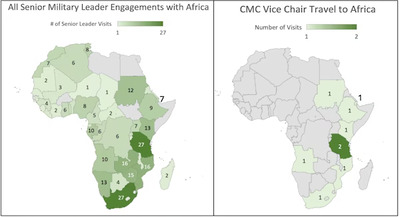
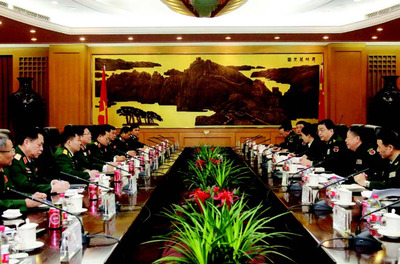
This commentary assesses the growing scope and strategic intent of the People’s Republic of China’s military diplomacy across Africa. The authors argue that Beijing has significantly expanded defense cooperation through training programs, bilateral engagements, PLA port calls, peacekeeping participation, and defense education exchanges, moves that both strengthen China’s security partnerships and broaden its strategic footprint on the continent. Unlike traditional Western approaches, Chinese military diplomacy emphasizes non-interference and operational support, appealing to a range of African governments while enhancing Beijing’s influence in regional security structures. The article situates these developments within broader strategic competition, explores potential implications for U.S. and allied interests, and highlights how African states are balancing China’s defense engagement alongside other external security partners in pursuit of national and regional stability.
-

Visualizing China’s Military Diplomacy
Raina Nelson, Matt Kuhlman, and Phillip C. Saunders
This commentary explores the evolving patterns of the People’s Republic of China’s military diplomatic engagements, and how China leverages these activities to shape regional and global security perceptions. The authors explain that Beijing’s expanding military diplomacy—through joint exercises, high-level military exchanges, port calls, and multilateral forums—is designed to signal strategic intent, strengthen security ties, and increase influence among partner and partner-aspirant states. Rather than pure cooperation, many of these interactions reflect China’s approach to strategic competition, alliance building, and shaping norms in ways that support Beijing’s broader objectives. By “visualizing” these patterns, the article highlights emerging geostrategic trends, underscores the implications for U.S. allies and partners, and suggests integrated policy responses to maintain balance and stability in the Indo-Pacific and beyond.
-

Prospects for U.S.-Japan Cyber Cooperation: Critical Infrastructure Protection and Joint Operations Perspectives
Keisuke Mizuhiro
This commentary examines the emerging landscape of cybersecurity cooperation between the United States and Japan, focusing on joint efforts to protect critical infrastructure and address shared vulnerabilities in cyberspace. The author highlights how strategic competition with China and ongoing Russian cyber operations have underscored the need for deeper bilateral collaboration in cyber defense, information sharing, and resilience planning. The article analyzes existing frameworks for U.S.–Japan cyber engagement, identifies policy and operational gaps, and recommends pathways to strengthen interoperability, develop unified deterrence strategies, and expand cooperation into areas such as supply chain security and incident response. It argues that enhanced U.S.–Japan cyber cooperation will bolster alliance credibility, reinforce regional stability in the Indo-Pacific, and contribute to a rules-based digital order.
-

Taking Stock of the National Stockpile: Modernizing for a Dynamic Response
Diane DiEuliis and Patrick Terrell
This commentary examines how the Strategic National Stockpile (SNS) and broader emergency medical supply systems in the United States performed during the COVID-19 pandemic and assesses what needs to be modernized for future large-scale health emergencies. The authors argue that longstanding reliance on a lean, “just-in-time” supply chain left limited surge capacity when global demand spiked in 2020, exposing vulnerabilities in pandemic preparedness. The article explores how SNS was originally conceived as surge support rather than comprehensive coverage, and how pandemic response efforts leveraged DoD assets and emergency procurement to fill gaps. The authors call for updating approaches to stockpiling, manufacturing, and biotechnology integration so that future responses are faster, more resilient, and better aligned with contemporary scientific and logistical capabilities.
-

Want to Grow the Economy? Try Fermenting It Instead
Peter Emanuel, Brian Feeney, and Diane DiEuliis
This commentary argues that the post-COVID-19 economic recovery presents a unique opportunity to prioritize biotechnology and biomanufacturing as engines of economic growth and national security. The authors contend that pandemic disruptions exposed long-standing weaknesses in U.S. manufacturing and supply chains, particularly over-reliance on foreign sources for critical materials. They describe how advances in robotics, artificial intelligence, and synthetic biology are transforming industry and argue that the United States must invest in domestic bio-industrial capacity, workforce retraining, and technological innovation to compete with global rivals, especially China, in emerging biotechnologies. Emphasizing that biomanufacturing can strengthen economic resilience and strategic autonomy, the article calls for an integrated policy approach to build a more robust, locally anchored industrial base.
-

Intellectual Overmatch Is Impossible If We Teach Only Half the Team: A Call for Professional Civilian Education
Laura J. Junor Pulzone and Justin Lynch
This commentary discusses the challenge of achieving intellectual overmatch in U.S. national security competition when civilian professionals across the national security enterprise receive uneven education and development opportunities compared with military personnel. The authors highlight the Joint Chiefs of Staff’s vision emphasizing both technical and intellectual overmatch, talent management, and rigorous education for military forces, but argue that without parallel investment in professional civilian education and workforce development, the U.S. cannot sustain a whole-of-government competitive advantage. The piece calls for expanding intellectual development opportunities, interagency collaboration, and deliberate talent management across civilian and military ranks to meet evolving strategic demands.
-

Alliance in Evolution: The Biden-Suga Summit
James J. Przystup
This commentary analyzes strategic outcomes and implications of the 2021 summit between U.S. President Joe Biden and Japanese Prime Minister Yoshihide Suga. The author highlights how the summit reaffirmed the strength and adaptability of the U.S.–Japan alliance amid evolving regional security challenges, especially in the Indo-Pacific. Key topics include cooperation on deterrence against North Korean missile and nuclear threats, economic and technological collaboration, and alignment on democratic values in the face of China’s rising influence. The article argues that the Biden-Suga meeting emphasizes a transition toward deeper strategic coordination — integrating traditional security commitments with expanded cooperation in emerging domains such as cyber, supply chain resilience, and global health security — and emphasizes the alliance’s central role in shaping regional stability and collective action among like-minded partners.
Strategic Insights is a forum for concise analyses of critical policy issues that affect U.S. national security interests. It is maintained by the Institute for National Strategic Studies (INSS) at the National Defense University (NDU). Strategic Insights is intended for the exchange of research-informed analysis. It is not a venue for the dissemination of unofficial information and comments, or as a means to survey visitor opinions. The views, findings, conclusions, and recommendations made by Strategic Insights are solely those of the author. They do not constitute the official position of INSS, NDU or the U.S. Department of War (DoW).
Printing is not supported at the primary Gallery Thumbnail page. Please first navigate to a specific Image before printing.