
-

Beyond 1918: Bringing Pandemic Response into the Present, and Future
Diane DiEuliis, Peter Emanuel, Alexander Titus, and James Giordano
This commentary reflects on global responses to pandemics by comparing the 1918 influenza pandemic with the COVID-19 crisis, highlighting lessons learned and shortcomings that persist in national and international preparedness and response frameworks. The authors argue that while medical and scientific capabilities have advanced significantly since 1918, structural public health vulnerabilities, coordination challenges, and policy shortfalls remain evident in contemporary pandemic response. The article examines the need to integrate pandemic planning into national security considerations, strengthen interagency cooperation, and improve global health governance mechanisms to address future biological threats effectively. It emphasizes that achieving resilient pandemic preparedness requires sustained investment, leadership, and strategic thinking that bridges health, security, economic, and societal dimensions.
-

Ready or Not: Regaining Military Readiness during COVID19
Diane DiEuliis and Laura J. Junor
This commentary examines how the outbreak of COVID-19 affected the readiness of U.S. military forces and explores strategic and operational challenges in restoring readiness amid the pandemic. The author reviews early impacts, including training disruptions, unit quarantines, and limitations on collective exercises, and describes how the armed services and combatant commands adapted policies to maintain preparedness. The article assesses the implications of prolonged readiness degradation for force posture, deterrence credibility, and alliance commitments, particularly in the Indo-Pacific and Europe. It emphasizes that returning to pre-pandemic readiness levels requires not only resuming traditional training but also addressing systemic vulnerabilities exposed by the crisis. Policy options discussed include innovative training modalities, resilience investments, and institutional learning to ensure future readiness under conditions of sustained global health uncertainty
-

Qassem Soleimani: Moscow's Syria Decision – Myth and Reality
John W. Parker
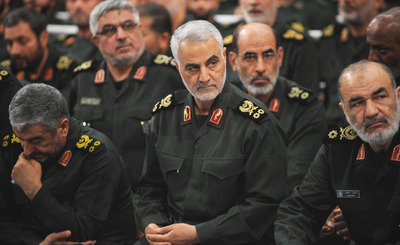
This commentary examines the narrative surrounding Iranian Major General Qassem Soleimani’s influence on Russia’s decision-making in Syria, challenging simplistic or exaggerated interpretations of Moscow’s behavior following Soleimani’s death. The author analyzes political and military dynamics between Russia and Iran in the Syrian theater, clarifying that while Tehran exerted operational influence through allied militia coordination, Moscow’s strategic choices were shaped primarily by its own geopolitical interests, not by Iranian direction. The article distinguishes mythic attributions of Soviet-style control from the reality of complex inter-state competition, highlighting Russia’s distinct military goals, diplomatic positioning with Turkey and Israel, and balancing of domestic and external pressures. It concludes that assessments of Syrian strategy should treat Russian and Iranian actions as separate, albeit interacting, inputs into a multi-actor conflict system.
-

China – Next Steps
James J. Przystup
This commentary discusses the evolving U.S.–China strategic relationship and offers recommendations for U.S. policy direction. It argues that competition with China, in Asia and globally, requires a return to foundational elements of U.S. strategy, notably strengthening alliances and regional partnerships to counterbalance Chinese influence. The author emphasizes that effective engagement with China cannot rest solely on rhetoric or isolation but must leverage cooperative frameworks and collective security arrangements among U.S. allies to shape outcomes in areas such as trade, security commitments, and regional stability. The piece suggests concrete steps to bolster U.S. position through diplomatic, economic, and defense cooperation, reaffirming that durable competitive advantage derives from coordinated, multilateral responses rather than unilateral actions alone.
-

Today the Spratlys and Paracels, Tomorrow…
James J. Przystup
This commentary examines China’s expanding assertiveness in the South China Sea, particularly its moves to create administrative zones over the Spratly and Paracel Islands, in the context of global distraction during the COVID-19 pandemic. The author argues that Beijing’s actions reflect a pattern of challenging the existing international order and pursuing unilateral territorial claims, often disregarding commitments such as the Declaration on the Conduct of Parties in the South China Sea. The piece underscores the strategic importance of alliances, regional institutions such as ASEAN, and a concerted multinational response to counter China’s efforts to alter the status quo. It emphasizes that pushing back against such efforts requires integrated policy coordination, shared democratic values among partners, and sustained U.S. leadership in the Indo-Pacific.
-

The Gilet Jaune Crisis
Steven Philip Kramer
This commentary examines the Gilet Jaune (Yellow Vest) protest movement in France as a case study in populist social upheaval, domestic political stress, and the broader challenge of legitimacy in advanced democratic societies. It explores the origins of the movement, initially sparked by fuel tax increases, and how it expanded into a broad-based expression of popular grievance against economic inequality, political elites, and perceived democratic deficits. The article assesses the French government’s response, the movement’s organization and tactics, and its implications for public order, governance, and social cohesion. It further places the crisis in comparative perspective with other protest movements in Western democracies and discusses the strategic implications for alliance partners and U.S. interests, including the potential for disruptive domestic politics to affect foreign policy and security cooperation.
-

Europe's Responses to the Migration Crisis: Implications for European Integration
Irene Kyriakopoulos
This commentary analyzes how the European Union and its member states have responded to the migration crisis that peaked in 2015–2016 and examines the broader implications for European integration. Although migration flows have declined, millions of asylum seekers have prompted political, social, and economic pressures across member states, revealing fractures in consensus and solidarity. Frontline states such as Greece and Italy bore disproportionate burdens, while divergent national approaches, ranging from open-door policies to restrictive border measures, have challenged the EU’s legal frameworks like the Schengen Area and common asylum rules. The inability to harmonize border security, asylum law, and burden-sharing threatens the cohesion and core principles of the European project, potentially deepening fragmentation and empowering nationalist sentiment across Europe.
-
Moscow Advances Ties to Iran's Regional Rivals
John W. Parker
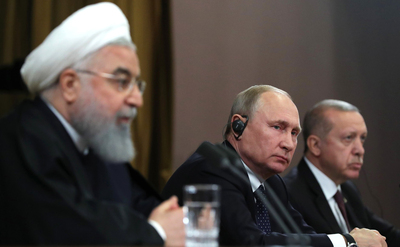
This commentary examines Russia’s expanding diplomatic, security, and economic engagement with states that are rivals or counterweights to Iran in the Middle East, including Saudi Arabia, the United Arab Emirates, and Israel. It situates Moscow’s maneuvers within shifting regional alignments driven by shared concerns over U.S. policy, Iran’s regional influence, and competing visions for order in the Gulf and Levant. The author analyzes how Russia’s outreach—through arms sales, joint military exercises, energy cooperation, and diplomatic initiatives—seeks to position Moscow as an indispensable partner across the region while minimizing Tehran’s ability to dominate its neighborhood. The article argues that Moscow’s strategy reflects a broader effort to maximize leverage with multiple actors, deepen regional influence, and hedge against overdependence on Iran. It concludes by assessing implications for U.S. strategic interests, alliance dynamics, and competition among great powers in West Asia.
-

Putin Heads For Riyadh
John W. Parker
This commentary examines Russian President Vladimir Putin’s 2019 visit to Riyadh, Saudi Arabia, and its implications for Russia–Saudi relations and the broader geopolitical landscape in the Middle East. Ahead of the summit, Putin planned to highlight progress on a long-standing economic agenda with Saudi leaders, engage on energy cooperation under the OPEC+ framework, and lobby for expanded Russian defense exports, including air defense systems. The article situates the visit in the context of decades-long bilateral efforts to deepen strategic ties despite divergences over regional conflicts, differences with U.S. policy, and mutual distrust. It discusses how Moscow seeks to position itself as an independent energy partner, leverage diplomatic momentum from shared interests in oil price stabilization, and extend its influence in a region traditionally dominated by U.S. security engagement.
-

The Mueller Report: The Missed Accelerants to Putin’s Interference
John W. Parker
This commentary examines the findings of the Mueller Report and assesses how the investigation’s insights relate to Russian interference efforts in the 2016 U.S. presidential election. Although the Mueller Report documented multiple contacts and Russian influence operations, it did not fully capture the broader, enduring mechanisms used by Moscow to shape political outcomes and exploit societal divisions. The article analyzes what it terms “missed accelerants” — structural vulnerabilities and strategic behaviors that amplified Russian interference, including social media manipulation, covert influence networks, and asymmetric leverage over political discourse. It places these dynamics within a longer history of Russian information operations and assesses implications for U.S. political resilience, alliance cohesion, and democratic integrity. The commentary concludes that understanding and countering the full range of interference vectors requires integrated policy responses beyond legal indictments.
-

The National Defense Strategy Commission Calls Attention to the “Quiet” Cross Functional Team Revolution in the National Security System
Christopher J. Lamb
This commentary highlights an underappreciated organizational transformation within the U.S. national security system: the expanding use of Cross Functional Teams (CFTs) across the Department of Defense, the CIA, and the National Security Agency. It explains how the National Defense Strategy Commission’s 2018 report, Providing for the Common Defense, endorsed CFTs as essential for integrating strategies and operational concepts to confront multi-domain challenges posed by China and Russia. While much of the media attention focused on the Commission’s warning about the U.S. potentially struggling in great-power conflict, this article argues that the Commission’s key organizational recommendation — adoption and empowerment of CFTs — is central to future national security effectiveness. It assesses cultural and bureaucratic barriers to CFT success and emphasizes the need for leadership, authority, and process adjustments to make them work across the national security enterprise.
-

Aspiration vs. Reality: Where are We with the North Korea Denuclearization Process?
James J. Przystup
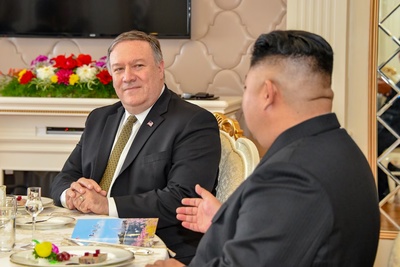
This commentary evaluates the state of U.S.–North Korea negotiations on denuclearization following the June 2018 Singapore Summit between President Donald Trump and North Korean leader Kim Jong Un. While the Trump administration moved from a strategy of “maximum pressure” to diplomatic engagement, progress on verifiable denuclearization remains elusive five months after the summit. Unclassified satellite imagery and reports indicate North Korea continues to maintain and possibly expand undeclared missile bases and nuclear capabilities. The author argues that commitments made in Singapore reflect a process rather than a definitive agreement and lack clear timelines or verification mechanisms. Without a detailed roadmap tied to sanctions relief, liaison offices, and phased steps, Pyongyang’s resume of nuclear and missile development may position it as a de facto nuclear state. The article concludes that genuine progress requires both sides to define denuclearization terms, verification standards, and implementation sequencing that reinforce U.S. credibility and regional security.
-

Leave Mountain People Alone
T.X. Hammes
This commentary proposes a historical and strategic rule for military planners: “leave mountain people alone.” Drawing on millennia of conflict history, the author argues that campaigns against resilient mountain societies—including Afghans, Chechens, Kurds, and others—have repeatedly failed because of terrain difficulties, entrenched culture, and local resistance. The article defines mountain people by livelihood and social structure rather than geography alone and examines why mountainous terrain favors defenders and complicates outside intervention. It then analyzes implications for U.S. policy in conflicts involving mountain societies such as eastern Pashtuns, Kurds, and Yemen’s Houthis, cautioning against attempts to impose centralized governance or reshape societies and suggesting that containment of threats may be more effective and realistic than nation-building efforts.
-

Tell-Tale MRAPS
Christopher J. Lamb
This commentary critiques a Washington Free Beacon article and associated unpublished study regarding the Mine-Resistant Ambush Protected (MRAP) vehicle procurement process during the Iraq and Afghanistan wars. The author argues that the Free Beacon and its source misrepresent congressional and Pentagon decision-making on MRAP deployment, obscuring key lessons about bureaucratic inertia and military procurement. Drawing on historical evidence, the article highlights the bipartisan nature of early congressional concern over armored protection, the effectiveness of MRAPs in reducing casualty rates compared with up-armored Humvees, and the long delay in widespread MRAP acquisition until intervention by then-Secretary of Defense Robert Gates. The piece concludes that the discourse around MRAPs offers broader insights into systemic obstacles within Pentagon decision-making, with implications for future defense acquisition reform.
-

A Failure of Strategic Vision: U.S. Policy and the Doklam Border Dispute
James J. Przystup
This commentary analyzes the 2017 Doklam border standoff between China and India (with Bhutan) through the lens of U.S. strategic policy. The author argues that U.S. reactions to the crisis reflected a lack of clear strategic vision regarding China’s rise and Asian security dynamics. Rather than shaping events with a cohesive strategy, Washington responded with reactive rhetoric and limited policy tools, failing to influence outcomes or reinforce alliance confidence. The article explains how the Doklam dispute underscored the shifting balance of power in Asia, tested regional security architectures, and exposed shortcomings in U.S. policy frameworks regarding great-power competition. It concludes that the United States must articulate a more coherent strategic approach toward China and regional allies to maintain credibility and effectively manage future crises in the Indo-Pacific.
-

Another Week; Another Missile Test: Inching Toward a Freeze – With Eyes Wide Shut?
James J. Przystup
This commentary analyzes evolving U.S. policy toward the Democratic People’s Republic of Korea (North Korea) in early 2017 amid recurring missile tests and diplomatic efforts involving China. After the Trump administration replaced “strategic patience” with a mix of military posturing, diplomatic pressure, and reliance on Beijing, Pyongyang continued ballistic missile launches that heightened regional tensions. The article examines Chinese calls for both North Korea to halt tests and the U.S.–South Korea alliance to suspend joint exercises, alongside discussions at the Trump–Xi Mar-a-Lago summit. It critically evaluates proposals for a freeze on North Korea’s nuclear and missile programs, arguing that such an approach risks tacitly recognizing North Korea as a nuclear state, empowering Pyongyang’s bargaining position, and leaving significant weapons capabilities intact without achieving verifiable denuclearization. The analysis urges reaffirming multilateral commitments such as the Six-Party Joint Statement rather than settling for a partial freeze that obscures core security objectives.
-

Vice President Pence in Indonesia: U.S. Interests in the South China Sea
James J. Przystup
This commentary analyzes U.S. strategic interests in the South China Sea in the context of Vice President Mike Pence’s April 2017 visit to Indonesia and Australia. The paper situates Pence’s trip as an opportunity for Washington to clarify its policy toward Southeast Asia amid escalating maritime disputes with China. It reviews recent developments in the South China Sea, including Chinese land reclamation and military infrastructure in contested features, and highlights Southeast Asian states’ hedging between economic ties with China and concerns about shifting U.S. engagement. The author argues that U.S. interests in freedom of navigation, peaceful dispute resolution under a rules-based order, and sustained regional partnerships remain central, and recommends visible naval presence, capacity building with strategic partners, and reaffirmation of support for ASEAN and Freedom of Navigation operations as components of effective U.S. policy.
-

China’s Russia Problem on North Korea
Joel Wuthnow
This commentary analyzes the evolving trilateral dynamics among China, Russia, and North Korea after a series of North Korean missile and nuclear tests in 2017. It examines tensions between Beijing and Moscow over approaches to Pyongyang, noting China’s increasing frustration with North Korea’s provocations and Russia’s distinct strategic calculus on the Korean Peninsula. The author argues that while China and Russia both call for restraint and denuclearization, their priorities differ: China seeks regional stability and preservation of its influence, while Russia aims to expand diplomatic leverage and normalize economic ties with Pyongyang. The article assesses how these divergent interests complicate unified diplomatic pressure on North Korea, highlights implications for U.S. policy, and suggests that understanding the Sino-Russian split is vital to crafting effective multilateral strategies to address nuclear proliferation and regional security in Northeast Asia.
Strategic Insights is a forum for concise analyses of critical policy issues that affect U.S. national security interests. It is maintained by the Institute for National Strategic Studies (INSS) at the National Defense University (NDU). Strategic Insights is intended for the exchange of research-informed analysis. It is not a venue for the dissemination of unofficial information and comments, or as a means to survey visitor opinions. The views, findings, conclusions, and recommendations made by Strategic Insights are solely those of the author. They do not constitute the official position of INSS, NDU or the U.S. Department of War (DoW).
Printing is not supported at the primary Gallery Thumbnail page. Please first navigate to a specific Image before printing.