

Browse Strategic Perspectives:
-

Understanding Space Frontier Areas: Strategy in Cislunar Space and Beyond
Todd W. Pennington
Space beyond geostationary Earth orbit, particularly cislunar space, is emerging as a strategically significant domain for national security, governance, and long-term competition. This paper introduces the concept of "Space Frontier Areas" to describe regions of space, including xGEO and the Earth–Moon system, where operations remain limited in scale but increasingly consequential. It argues that current strategic thinking about these areas is overly bipolar, framing activities as either near-term security concerns or long-term economic opportunities, thereby constraining nuanced policy choices. To address this limitation, the paper proposes an analytical framework organized around four strategic purposes—prestige, governance, security, and resources—that can be weighted according to their immediacy and importance across different time horizons. Drawing on expert interviews and qualitative analysis, the framework demonstrates how reducing zero-sum thinking can improve strategic coherence. This approach enables more realistic assessments of risk, prioritization, and resource allocation as space operations expand beyond near-Earth orbit.
-
Chinese Military Diplomacy
Phillip C. Saunders and Melodie Ha
Chinese military diplomacy serves both strategic and operational goals. The main strategic goals are supporting Chinese foreign policy and shaping the strategic environment; operational goals include supporting People’s Liberation Army (PLA) modernization and collecting intelligence on foreign militaries.
-

The German Defense-Industrial Zeitenwende: Implications for Transatlantic Security
Brett Swaney
The Zeitenwende, or “watershed moment”—announced by Chancellor Olaf Scholz in February 2022, days after Russia’s invasion of Ukraine—outlined a set of policy shifts, including the development of Germany’s first-ever National Security Strategy, that appeared to signal a greater role for Germany in the defense and security of Europe. The German National Security Strategy draws a clear connection between the need for a robust defense-industrial base and the foundation for the capabilities needed to meet North Atlantic Treaty Organization (NATO) defense and deterrence commitments, support Ukraine, and provide for the recapitalization of allies and partners. To date, however, there has been less focus on the extent to which the Zeitenwende galvanized change in Germany’s important defense-industrial base. This study assesses the extent to which the strategic shift signaled by the Zeitenwende is reflected and being implemented in Germany’s defense-industrial base policy and the implications for transatlantic security.
-
Taming the Hegemon: Chinese Thinking on Countering U.S. Military Intervention in Asia
Joel Wuthnow
This publication is by INSS Center for the Study of Chinese Military Affairs Senior Research Fellow Dr. Joel Wuthnow. The monograph uses internal PLA writings to examine recent Chinese thinking on countering U.S. intervention in Asia, and finds that PLA experts emphasize efforts to leverage nuclear, conventional, and informational (space, cyber, and cognitive warfare) tools to deter U.S. intervention, but also advocate preparing for asymmetric attacks against key targets in the U.S. military system in case the United States intervenes anyway.
-
Lessons and Legacies of the War in Ukraine: Conference Report
Jeffrey Mankoff
The international conference titled “Lessons and Legacies of the War in Ukraine” took place on November 17, 2023, at the National Defense University in Washington, DC. Hosted by the University’s Institute for National Strategic Studies, the conference brought together perspectives from practitioners in the U.S. Government and uniformed military, along with experts from academia and the think tank community in the United States, United Kingdom, Ukraine, and Taiwan, to discuss the lessons that the United States and its allies should take from the first year and a half of the effort to repel Russia’s invasion of Ukraine.
-
Discerning the Drivers of China’s Nuclear Force Development: Models, Indicators, and Data
David C. Logan and Phillip C. Saunders
For decades following its first test in 1964, China maintained a small nuclear force and a doctrine emphasizing deterrence and no-first-use of nuclear weapons. China has recently embarked on an unprecedented campaign of expansion and modernization, which is changing the size, structure, and operational posture of its nuclear forces. The growing discrepancy between China’s restrained declaratory policy and advancing nuclear capabilities raises important questions about the status and future trajectory of China’s nuclear forces, with major implications for the United States.
-
Priorities for NATO Partnerships in an Era of Strategic Competition
Lisa Aronsson and Brett Swaney
The Joseph Biden administration’s 2022 National Defense Strategy (NDS) establishes the People’s Republic of China as the “pacing challenge” and a priority for the United States, followed by Russia’s “acute” threat in Europe. The NDS also emphasizes the importance of working with allies and partners to address these threats and reinforce deterrence. The North Atlantic Treaty Organization (NATO), the most institutionalized and capable of U.S. alliances, aspires to play a role in addressing both the threat from Russia in Europe and the longerterm global security implications of China’s rise. With a position of leadership in NATO, the United States has an opportunity to
-
Lawfare in Ukraine: Weaponizing International Investment Law and the Law of Armed Conflict Against Russia’s Invasion
Eric Chang
This paper explores Ukraine’s innovative use of international investment law to hold Russia financially liable for damages arising out of its 2014 invasion and occupation of Crimea, and how this use of “lawfare” strategy can be further leveraged considering Russia’s renewed military invasion of Ukraine in 2022.
-
Dangerous Alliances: Russia’s Strategic Inroads in Latin America
Douglas Farah and Marianne Richardson
Russia’s strategic interests in Latin America center on establishing a multisector, persistent presence in the Western Hemisphere as a counterweight to U.S. and North Atlantic Treaty Organization (NATO) presence in the former Soviet Union and bordering states. The engagement focuses on aggressive implementation of what the West calls the doctrine of “hybrid warfare.” This approach fuses hard and soft power across multiple domains, recognizing the existence of a permanent state of confrontation with the West. This strategy undergirds the rationalization and operationalization of Russia’s invasion of Ukraine.
-
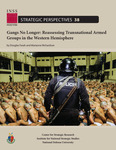
Gangs No Longer: Reassessing Transnational Armed Groups in the Western Hemisphere
Douglas Farah and Marianne Richardson
MS-13 (Mara Salvatrucha) in the Northern Triangle of Central America and the Primeiro Comando da Capital (PCC; First Command of the Capital), based in S.o Paulo, Brazil, are both tier-one criminal/political/military threats to the stability of the Western Hemisphere.1 These groups—no longer gangs but community-embedded transnational armed groups (CETAGs) in the pantheon of nonstate armed actors—are becoming more deeply enmeshed in the global drug trade, the body politic, and armed conflicts in the hemisphere. These CETAGs, rooted and enduring in their communities of origin, are likely to expand across the hemisphere and are driving multiple types of corruption that President Joe Biden in December 2021 vowed to fight as a core U.S. strategic interest.
-
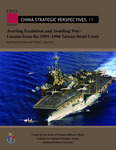
Averting Escalation and Avoiding War: Lessons from the 1995–1996 Taiwan Strait Crisis
Kristen Gunness and Phillip C. Saunders
This study assesses information-sharing, communication, and policy coordination between U.S. and Taiwan decisionmakers in the 1995–1996 Taiwan Strait Crisis, derives key lessons, considers the implications for a future crisis, and makes recommendations to policymakers.
-
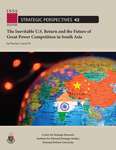
The Inevitable U.S. Return and the Future of Great Power Competition in South Asia
Thomas F. Lynch
More than a year after America’s painful Afghanistan withdrawal, the future of U.S. and Western security interests in South Asia no longer relates mainly to the terrorism threat from Salafi jihadism, which has receded and reoriented there to be most menacing toward Pakistan and China. Instead, American security interests now require the proper posture for long-term Great Power competition (GPC) with China. Such a posture in South Asia requires patient, persistent growth in the slowly maturing, overt strategic security partnership with India and a quiet regeneration of a transactional one with Pakistan.
-
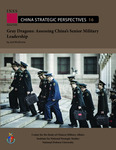
Gray Dragons: Assessing China’s Senior Military Leadership
Joel Wuthnow
This report analyzes more than 300 biographies of senior Chinese military officers from 2015 and 2021 to assess the composition, demographics, and career patterns of the People’s Liberation Army (PLA) leadership.
-
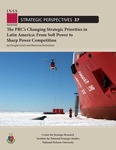
The PRC’s Changing Strategic Priorities in Latin America: From Soft Power to Sharp Power Competition
Douglas Farah and Marianne Richardson
For the past 15 years, the willingness of the People’s Republic of China (PRC) to give billions of dollars in loans across Latin America created the perception that the PRC is spending unlimited resources to woo allies in a region where the United States historically carries significant influence. Currently, the PRC is heightening this perception by delivering millions of COVID-19 vaccines to Latin America, buttressed by a robust media operation to shape the information environment.
-
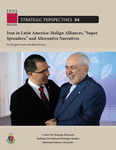
Iran in Latin America: Malign Alliances, “Super Spreaders,” and Alternative Narratives
Douglas Farah and Alexa Tavarez
Iran’s ability to shape the information environment and spread the narrative of the United States as an imperialist force—perpetrating violence and instability in Latin America—has grown in recent years. These ongoing and multifaceted campaigns of disinformation and carefully curated messages are coordinated with Russian and Venezuelan state media companies and thousands of allied Internet and social media accounts. Together, these efforts pose a strategic challenge to U.S. interests and regional efforts to promote stability, democratic values, and the rule of law. While less visible than shipping gasoline to the Nicolás Maduro regime and other provocative actions, Iran’s advances in Latin America’s information space is not any less threatening than its more overt activities.
-
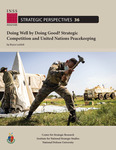
Doing Well by Doing Good? Strategic Competition and United Nations Peacekeeping
Bryce Loidolt
The Joseph Biden administration’s Interim Strategic Guidance emphasizes the importance of ensuring that international organizations “continue to reflect the universal values, aspirations, and norms that have underpinned the UN [United Nations] system since its founding 75 years ago, rather than an authoritarian agenda.”1 In this context, several trends in competitor contributions to UN peacekeeping operations could be cause for alarm and warrant greater U.S. engagement. Although Washington remains the largest billpayer for these missions, both Russian and Chinese personnel contributions to UN peacekeeping have surpassed those of the United States. Chinese financial contributions are slowly increasing and, unlike the United States, are paid on time, in full, and without conditions. China is also the largest troop contributor to peacekeeping missions among the Permanent 5 members of the UN Security Council.
-
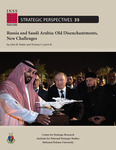
Russia and Saudi Arabia: Old Disenchantments, New Challenges
John W. Parker and Thomas F. Lynch III
The Joseph Biden administration can manage its recalibration of relations with Saudi Arabia without unwarranted fear that Riyadh will view Russia as a safe-harbor alternative to the United States on a myriad of state-to-state interactions that are most important to the Kingdom. While Russia’s transactional approach to foreign partners has at times given it advantages in some areas over the more value-based framework of U.S. foreign relations, there clearly have been limits to the Russian style of dealing with Saudi Arabia in this century. For now, Russian President Vladimir Putin appears to have lost his bet on Saudi Crown Prince Mohammed bin Salman (MbS) as a resolute Russian strategic partner. However, Putin will continue to do business when necessary with the Kingdom of Saudi Arabia (KSA) on a transactional basis given its role as a key player in the region, particularly in the Expanded Organization of the Petroleum Exporting Countries (OPEC+). U.S. foreign policy during the Biden administration will do best to recognize that the Russia-Saudi partnership is a transactional one that will endure, but not at the highest order of broad functionality, including at times within OPEC+.
-
The Micromanagement Myth and Mission Command: Making the Case for Oversight of Military Operations
Christopher J. Lamb
This paper argues that leaders, historians, and pundits have grossly exaggerated civilian micromanagement of the U.S. military, resulting in less effective civilian and military oversight of military operations and a reduced likelihood that military operations will achieve strategic results. Exaggerating the frequency and impact of civilian micromanagement encourages military leaders to distance themselves from oversight and disinclines Presidents from exercising it. There is also evidence that within the military chain of command, an exaggerated concern with civilian micromanagement has distorted understanding of good leadership and the Joint Staff’s “mission command” doctrine, encouraging the military to ignore its own time-honored leadership principles.
-
System Overload: Can China’s Military Be Distracted in a War over Taiwan?
Joel Wuthnow
In his 2019 New Year’s Day address, Chinese Communist Party (CCP) General Secretary Xi Jinping issued a stern warning to Taiwan: “We make no promise to abandon the use of force, and retain the option of taking all necessary measures.” At the same time, he warned that force could also be used to forestall “intervention by external forces,” referring to the United States. While designed to intimidate recalcitrant Taiwan and U.S. leaders—and appeal to domestic nationalists—rather than to signal an imminent confrontation, Xi’s comments underscored the very real military threats that China’s People’s Liberation Army (PLA) poses to Taiwan. As the U.S. Defense Intelligence Agency notes, Taiwan has been the “primary driver” of PLA modernization for decades, spurring the development of short- and long-range ballistic missiles, amphibious and airborne units, and other capabilities targeted at Taiwan and intervening U.S. forces. Those threats have become more worrisome as the PLA conducts large-scale exercises and provocative bomber flights around the island. The PLA’s improved warfighting capabilities have contributed to China’s near-term cross–Taiwan Strait objective—deterring Taiwan independence. Understanding the costs that a war would impose on the island, few but the most die-hard Taiwan independence activists have supported overt moves toward de jure independence.
-
Finding Ender: Exploring the Intersections of Creativity, Innovation, and Talent Management in the U.S. Armed Forces
Susan F. Bryant and Andrew Harrison
Current national-level strategic documents exhort the need for creativity and innovation as a precondition of America’s continued competitive edge in the international arena. But what does that really mean in terms of personnel, processes, and culture? This paper argues that an overlooked aspect of talent management, that of cognitive diversity, must be considered when retooling military talent management systems. Going one step further, talent management models must incorporate diversity of both skill set and mindset into their calculus. Specifically, the Department of Defense (DOD) needs to recruit, retain, and utilize Servicemembers and civilians with higher than average levels of creativity and a propensity for innovative thinking. It needs “enders.”
-
A Strategic Overview of Latin America: Identifying New Convergence Centers, Forgotten Territories, and Vital Hubs for Transnational Organized Crime
Douglas Farah and Kathryn Babineau
This paper outlines a number of critical strategic challenges in Latin America for U.S. policymakers, which were directly identified in the December 2017 National Security Strategy. However, despite this recognition, these issues are seldom featured in policy discussions about the region.
-
El Salvador’s Recognition of the People’s Republic of China: A Regional Context
Douglas Farah and Caitlyn Yates
In January 2016, the People’s Republic of China (PRC) abandoned an 8-year truce in its war with the Republic of China (ROC) over diplomatic recognition around the world and subsequently moved to aggressively woo traditional Taipei allies. This paper centers on the PRC’s recent successful push into Latin America, and particularly in Central America—historically a primary area of influence for the United States. Through a concerted effort—and often in exchange for promises of mega investments and financial aid—the PRC increasingly receives a warm welcome across the Latin American continent.
-
Between Russia and Iran: Room to Pursue American Interests in Syria
John W. Parker
President Donald Trump has underscored containing Iran’s sway as a key element in establishing a “strong and lasting footprint” in Syria as the United States moves toward bringing its Soldiers home. In pursuing this key American objective, this paper recommends that Washington take advantage of the “daylight” between Russia and Iran, and that it be American policy at all levels to work to expand it. This long-existing “daylight” was underscored in 2018 by calls in Moscow for Iran to withdraw its forces from some or all of Syria, and by Putin’s positive regard at the summit in Helsinki with President Trump for Israel’s security requirements.
-
Five Conundrums: The United States and the Conflict in Syria
Michael A. Ratney
For the past 8 years, two U.S. administrations, the United Nations (UN), and numerous foreign governments have sought to end the catastrophic war in Syria and reach a negotiated political settlement to the conflict. Their efforts have repeatedly been complicated, even thwarted, by the highly contested and violent politics underlying the conflict, the sheer number of conflict actors inside and outside of Syria, and those actors’ diverse and often irreconcilable objectives.
-
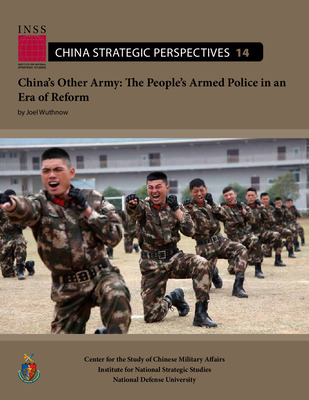
China's Other Army: The People's Armed Police in an Era of Reform
Joel Wuthnow
China’s premier paramilitary force—the People’s Armed Police (PAP)—is undergoing its most profound restructuring since its establishment in 1982.
- Previously under dual civilian and military command, the PAP has been placed firmly under China’s military. As chairman of the Central Military Commission, Xi Jinping now has direct control over all of China’s primary instruments of coercive power. This represents the highest degree of centralized control over China’s paramilitary forces since the Cultural Revolution.
- Local and provincial officials have lost the ability to unilaterally deploy PAP units in the event of civil unrest or natural disasters, but can still request support through a new coordination system.
- The China Coast Guard, which previously reported to civilian agencies, has been placed within the PAP and is thus now part of the military command structure.
- New PAP operational commands, known as “mobile contingents,” have been established with a diverse mix of capabilities. They will play a key role in protecting the capital and could be deployed in a Taiwan contingency, among other missions.
- Geographic distribution of mobile PAP units remains skewed to western China, providing rapid reaction capabilities that could be used to repress dissent in Xinjiang and Tibet.
Politically, the reforms reaffirm Chinese Communist Party (and Xi Jinping’s) control over the PAP and may reduce the scope for local abuse of power.
- Despite earlier reforms, the PAP’s chain of command was convoluted, confusing, and decentralized. These reforms sought to ensure central party control over an organization deemed vital for ensuring the party’s security and survival.
- Centralizing command also attempts to bolster the party’s legitimacy by reducing the ability of local officials to misapply PAP assets through corruption or overuse of force to handle local grievances.
- A consequence of tighter control, however, could be slower responses to incidents as local officials have to submit requests through PAP channels. In some cases, officials may be reluctant to request PAP support in order to avoid negative attention from senior leaders.
- The reforms place Xi firmly in charge of the PAP, though he will have to exercise authority through trusted agents. The success of continued PAP reforms will depend on elite consensus that centralized management of PAP deployments is desirable.
Operationally, the reforms narrow the PAP’s responsibilities to three key areas: domestic stability, wartime support, and maritime rights protection.
- Several law enforcement and economic functions previously under the PAP, such as border guards and gold mining, have been divested and placed within appropriate civilian ministries and localities.
- PAP internal security forces remain focused on domestic security missions, including maintaining stability in western China, guarding government compounds, and disaster relief. PAP units would also be on the frontlines in responding to a major threat to the regime.
- The PAP has also been encouraged to play a stronger role in supporting People’s Liberation Army (PLA) combat operations. Key roles could include guarding critical infrastructure and supply lines during wartime. Nevertheless, current PAP-PLA cooperation appears superficial and will remain so if the PAP is not better integrated into the PLA’s joint command system.
- Incorporating the coast guard into the PAP could presage stronger integration with the navy in terms of operations, training, and equipment development, but this will require closer institutional cooperation than currently exists.
- The PAP will continue to face capabilities gaps, especially in niche areas such as special operations forces and helicopters. Its ability to close those gaps will depend on its political effectiveness in future budget negotiations.
PAP activities beyond China’s borders are likely to increase and could have implications for the United States and other Indo-Pacific states.
- The PAP has emerged as a partner of choice for foreign governments in areas such as counterterrorism and peacekeeping training, in addition to its longstanding role as contributors to United Nations peacekeeping missions.
- PAP units are also likely to deploy overseas to support counterterrorism operations. In some cases, Beijing may also rely on PAP capabilities to protect Chinese citizens and assets abroad, such as projects under the Belt and Road Initiative.
- Closer coast guard–navy cooperation, if it emerges, would increase risks to U.S. and allied maritime operations in the South and East China seas. U.S. officials will need to determine if new agreements are needed, and feasible, to cover coast guard encounters.
Over the long run, PAP forces may one day deploy to support Chinese combat operations; one example is a potential role in providing stability during a pacification campaign on Taiwan.