

Trump and Xi at the APEC Leaders’ Summit: The Paradox of a U.S.–China Military Crisis Prevention MOU
Files
Download Full Text (100 KB)
Description
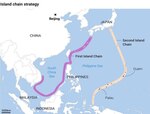
A proposed U.S.–China military crisis prevention agreement could reduce the risk of accidental conflict in the western Pacific, but it could also encourage greater Chinese military assertiveness. This article examines how improved military communications and crisis management procedures could reduce unintended escalation while giving Beijing greater confidence to pursue coercive activities below the threshold of armed conflict. It explores differences in U.S. and Chinese approaches to crisis prevention and the implications for Taiwan, the South China Sea, and the East China Sea. The analysis argues that effective crisis prevention must account for Chinese Coast Guard and maritime militia activities, preserve U.S. military access, and reinforce conventional deterrence and allied security commitments.
Document Type
Article
Topic(s)
Chinese Military, Great Power Competition, Military Strategy
Region(s)
East Asia, Southeast Asia
Publication Date
11-17-2026
Publisher
Institute for National Strategic Studies
City
Washington, DC
Keywords
U.S.–China relations, military crisis prevention, crisis management, Chinese military, military-to-military communications, strategic deterrence, stability-instability paradox, gray-zone coercion, First Island Chain, Indo-Pacific security
Author ORCID Identifier
Recommended Citation
Lynch, Thomas F. III, "Trump and Xi at the APEC Leaders’ Summit: The Paradox of a U.S.–China Military Crisis Prevention MOU" (2026). Strategic Insights. 72.
https://digitalcommons.ndu.edu/strategic-insights/72


